Buy viplivesports.eu ?
We are moving the project
viplivesports.eu .
Are you interested in purchasing the domain
viplivesports.eu ?
domain@kv-gmbh.de · 0541-91531010
Buy viplivesports.eu ?
How can one control small pigment spots?
One can control small pigment spots by using topical treatments such as retinoids, hydroquinone, or vitamin C serums to help lighten the spots. It is also important to wear sunscreen daily to prevent further darkening of the spots. In-office treatments such as chemical peels, microdermabrasion, or laser therapy can also be effective in reducing the appearance of pigment spots. Consistency in skincare routine and treatments is key to effectively controlling small pigment spots. **
Are these pigment disorders?
Yes, these are pigment disorders. Pigment disorders refer to conditions that affect the color of the skin, hair, or eyes. In this case, the examples provided - albinism, vitiligo, and melasma - are all pigment disorders that result in abnormal pigmentation of the skin. Albinism is characterized by a lack of melanin production, vitiligo causes patches of depigmented skin, and melasma leads to dark patches on the skin. **

Similar search terms for Neoretin-Discrom-Control-Pigment
Top-Angebote
Products related to Neoretin-Discrom-Control-Pigment:
-
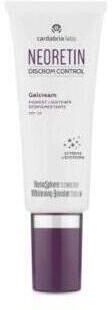
Neoretin Discrom Control Gel Cream 40 mlHealth and Beauty Creams Neoretin Discrom Control Gel Cream 40 ml Formula with easy extensibility and rapid absorption that reduces stains and prevents their appearance thanks to sun filters (UVB and UVA). Includes Whitening Booster System, a system of powerful active ingredients that act on the formation of the stain, in the phases of melanin synthesis. With retexturizing and renewing activity, thanks to RetinSphere Technology, it provides more uniform and luminous skin. Its high tolerability allows it to be used all year round. Tested under dermatological and ophthalmological control. Instructions for use: External use.\ Apply in the morning to clean skin on the face and neck.37,52 £*Shipping: 3,99 £Secure redirect to the provider
-
Neoretin Discrom Control Maintenance Depigmenting Cream 50 mlHealth and Beauty Creams Neoretin Discrom Control Maintenance Depigmenting Cream 50 ml With moisturizing and softening active ingredients that guarantee high tolerability, suitable for alternating with depigmenting treatments or as a maintenance product. Formulated with Whitening Booster System technology, tranexamic acid, and niacinamide to reduce skin pigmentation. With retexturizing and renewing properties thanks to RetinSphere Technology. EDAFENCE protects against pollution, one of the main causes of dark spots, and other factors caused by environmental stress. With a light, non-comedogenic texture that is quickly absorbed, making it easy to apply. Tested under dermatological and ophthalmological supervision. Maintenance depigmenting treatment for skin with any type of hyperpigmentation. Alternate with depigmenting techniques performed in a medical consultation. Directions for use: Apply at night to clean skin on the face and neck, following the NEORETIN Discrom Control regimen included in the package leaflet or as instructed by your healthcare professional.47,07 £*Shipping: 3,99 £Secure redirect to the provider
-
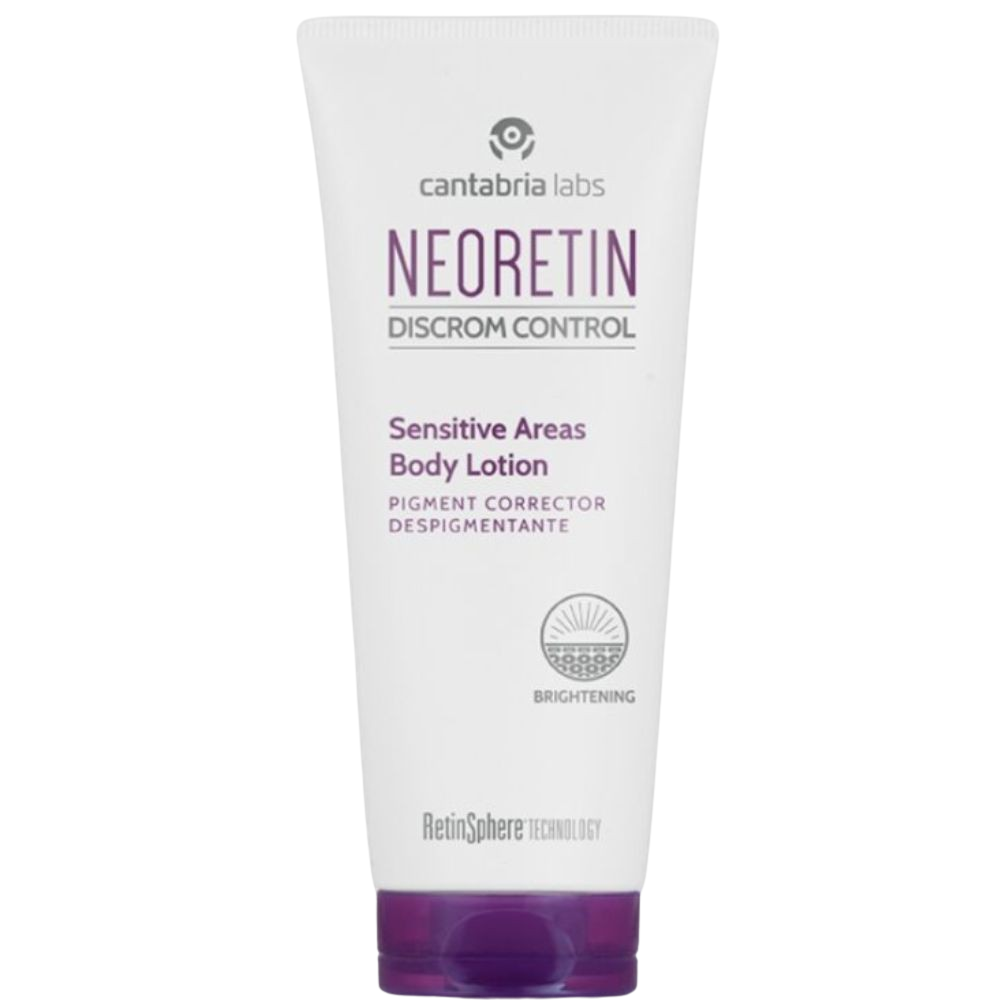
Neoretin Discrom Control Sensitive Areas Body Lotion 100mLA body lotion for dark spots and uneven skin tone. Brighten and even out your skin tone with This product, designed for delicate areas and fast absorption. Evens skin tone in sensitive areas (inner thighs, elbows, knees, underarms). Hydrates and strengthens the skin barrier. Lightweight texture for fast absorption.20,81 £*Shipping: 5,22 £Secure redirect to the provider


-
Is this a pigment disorder?
Yes, vitiligo is a pigment disorder that causes the skin to lose its color in patches. It occurs when the cells that produce melanin, the pigment that gives skin its color, are destroyed. This results in white patches on the skin that can vary in size and location. **
-
What is a pigment disorder?
A pigment disorder is a condition that affects the color of the skin, hair, or eyes. It can result in an abnormal production or distribution of melanin, the pigment that gives color to these body parts. This can lead to conditions such as albinism, vitiligo, or hyperpigmentation. Pigment disorders can be genetic or acquired, and they can have a significant impact on a person's appearance and self-esteem. **
-
How does the visual pigment work?
Visual pigments are proteins found in the rod and cone cells of the retina that are responsible for capturing light and initiating the process of vision. When light enters the eye and strikes a visual pigment molecule, it causes a chemical reaction that leads to the activation of the pigment. This activation triggers a series of events that ultimately result in the generation of electrical signals that are sent to the brain for processing. Different visual pigments are sensitive to different wavelengths of light, allowing us to perceive a wide range of colors. **
-
What is the pigment in carrots?
The pigment in carrots is called beta-carotene. Beta-carotene is a type of carotenoid, which is a group of pigments that give fruits and vegetables their vibrant colors. In carrots, beta-carotene is responsible for their bright orange color. It is also a precursor to vitamin A, which is important for maintaining healthy vision, skin, and immune function. **

How do you mix pigment colors correctly?
To mix pigment colors correctly, start by choosing the primary colors (red, blue, yellow) and white to create a wide range of colors. Begin by mixing small amounts of pigment at a time to avoid wasting materials. Use a palette knife to mix the colors thoroughly on a palette or mixing surface, ensuring there are no streaks or clumps. Remember that different pigments have varying strengths, so adjust the ratios accordingly to achieve the desired color. **
What causes pigment disorders on the stomach?
Pigment disorders on the stomach can be caused by a variety of factors, including genetics, hormonal changes, sun exposure, and certain medications. For example, conditions such as vitiligo can cause the loss of pigment in certain areas of the skin, including the stomach. Hormonal changes, such as those that occur during pregnancy, can also lead to changes in skin pigmentation. Additionally, certain medications and chemicals can cause skin discoloration, including on the stomach. It's important to consult a healthcare professional to determine the specific cause of pigment disorders on the stomach and to explore treatment options. **
Top-Angebote
Products related to Neoretin-Discrom-Control-Pigment:
-
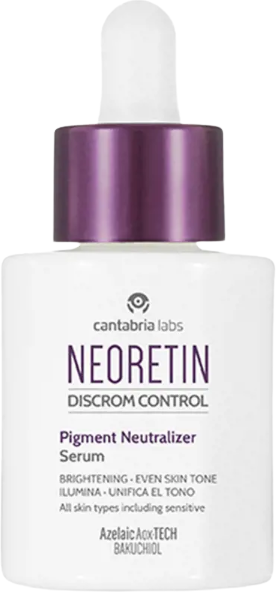
Neoretin Discrom Control Pigment Neutralizing Serum 30 mlHealth and Beauty Serums Neoretin Discrom Control Pigment Neutralizing Serum 30 ml Treatment specifically designed to reduce dark spots and skin hyperpigmentation. This serum contains active ingredients that help regulate melanin production and improve skin tone and evenness. Benefits: Reduction of spots and hyperpigmentation: Discrom Control serum is formulated to reduce the appearance of dark spots, hyperpigmentation, and uneven skin tone, achieving a more even and radiant complexion. Depigmenting action: The active ingredients present in the serum help regulate the production of melanin, the pigment responsible for skin color, and inhibit the formation of new spots, providing a depigmenting effect on the skin. Hydration and luminosity: This serum provides intense and long-lasting hydration to the skin, helping to improve its texture and give it a more luminous and radiant appearance. Main ingredients: Niacinamide: An ingredient that helps regulate melanin production and reduce the appearance of dark spots on the skin. Retinol: A derivative of vitamin A that stimulates cell renewal and contributes to the reduction of hyperpigmentation. Kojic acid: A depigmenting ingredient that inhibits melanin production and helps lighten skin blemishes. Vitamin C: A powerful antioxidant that contributes to skin luminosity and the reduction of hyperpigmentation. Effects: Reduction of spots and hyperpigmentation. Improves skin tone and uniformity. Intense hydration and radiance for the skin. How to use: Apply a few drops of the Discrom Control serum to clean, dry skin. Gently massage the serum into your face and neck until fully absorbed. Use the serum morning and night as part of your daily skincare routine. You can follow it with your usual moisturizer and sunscreen during the day.35,21 £*Shipping: 3,99 £Secure redirect to the provider
-
Neoretin Discrom Control Microexfoliating Face Cleanser 200mLA facial cleanser for dark spots and uneven skin tone. It a powerful facial cleanser designed to provide triple exfoliation—enzymatic, physical, and chemical—leaving skin clean, radiant, and with an even tone. Triple exfoliation for deep cleansing and skin renewal. Enhances skin radiance and evens out skin tone.14,71 £*Shipping: 6,94 £Secure redirect to the provider
-
Neoretin Discrom Control Gel Cream 40 mlHealth and Beauty Creams Neoretin Discrom Control Gel Cream 40 ml Formula with easy extensibility and rapid absorption that reduces stains and prevents their appearance thanks to sun filters (UVB and UVA). Includes Whitening Booster System, a system of powerful active ingredients that act on the formation of the stain, in the phases of melanin synthesis. With retexturizing and renewing activity, thanks to RetinSphere Technology, it provides more uniform and luminous skin. Its high tolerability allows it to be used all year round. Tested under dermatological and ophthalmological control. Instructions for use: External use.\ Apply in the morning to clean skin on the face and neck.37,52 £*Shipping: 3,99 £Secure redirect to the provider
-
Neoretin Discrom Control Maintenance Depigmenting Cream 50 mlHealth and Beauty Creams Neoretin Discrom Control Maintenance Depigmenting Cream 50 ml With moisturizing and softening active ingredients that guarantee high tolerability, suitable for alternating with depigmenting treatments or as a maintenance product. Formulated with Whitening Booster System technology, tranexamic acid, and niacinamide to reduce skin pigmentation. With retexturizing and renewing properties thanks to RetinSphere Technology. EDAFENCE protects against pollution, one of the main causes of dark spots, and other factors caused by environmental stress. With a light, non-comedogenic texture that is quickly absorbed, making it easy to apply. Tested under dermatological and ophthalmological supervision. Maintenance depigmenting treatment for skin with any type of hyperpigmentation. Alternate with depigmenting techniques performed in a medical consultation. Directions for use: Apply at night to clean skin on the face and neck, following the NEORETIN Discrom Control regimen included in the package leaflet or as instructed by your healthcare professional.47,07 £*Shipping: 3,99 £Secure redirect to the provider
-
How can one control small pigment spots?
One can control small pigment spots by using topical treatments such as retinoids, hydroquinone, or vitamin C serums to help lighten the spots. It is also important to wear sunscreen daily to prevent further darkening of the spots. In-office treatments such as chemical peels, microdermabrasion, or laser therapy can also be effective in reducing the appearance of pigment spots. Consistency in skincare routine and treatments is key to effectively controlling small pigment spots. **
-
Are these pigment disorders?
Yes, these are pigment disorders. Pigment disorders refer to conditions that affect the color of the skin, hair, or eyes. In this case, the examples provided - albinism, vitiligo, and melasma - are all pigment disorders that result in abnormal pigmentation of the skin. Albinism is characterized by a lack of melanin production, vitiligo causes patches of depigmented skin, and melasma leads to dark patches on the skin. **
-
Is this a pigment disorder?
Yes, vitiligo is a pigment disorder that causes the skin to lose its color in patches. It occurs when the cells that produce melanin, the pigment that gives skin its color, are destroyed. This results in white patches on the skin that can vary in size and location. **
-
What is a pigment disorder?
A pigment disorder is a condition that affects the color of the skin, hair, or eyes. It can result in an abnormal production or distribution of melanin, the pigment that gives color to these body parts. This can lead to conditions such as albinism, vitiligo, or hyperpigmentation. Pigment disorders can be genetic or acquired, and they can have a significant impact on a person's appearance and self-esteem. **
Similar search terms for Neoretin-Discrom-Control-Pigment
-
Neoretin Discrom Control Sensitive Areas Body Lotion 100mLA body lotion for dark spots and uneven skin tone. Brighten and even out your skin tone with This product, designed for delicate areas and fast absorption. Evens skin tone in sensitive areas (inner thighs, elbows, knees, underarms). Hydrates and strengthens the skin barrier. Lightweight texture for fast absorption.20,81 £*Shipping: 5,22 £Secure redirect to the provider
-
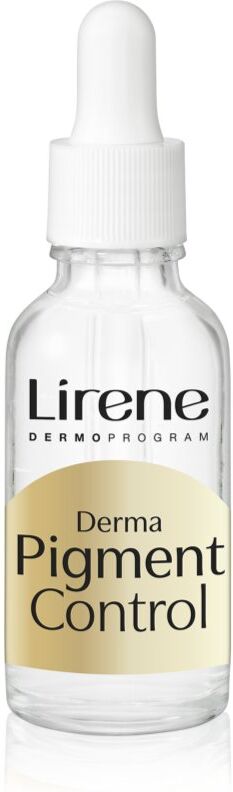
Lirene Derma Pigment Control Acid & Vitamin Serum serum for pigment spot correction 30 mlLirene Derma Pigment Control Acid & Vitamin Serum, 30 ml, Skin Serums for Women, Does it feel as though your skin needs something more than just the care provided by a cream? The Lirene Derma Pigment Control Acid & Vitamin Serum facial serum is the perfect product to enrich your skincare routine – it pampers the skin and delivers an intensive treatment. With its high concentration of active ingredients, the effect it has on your skin is far more pronounced and faster than with a face cream. Its liquid consistency makes application easier, as it is absorbed into the skin very well. Characteristics: evens skin tone restores freshness and youthful beauty to your skin a reduction of dark spots suitable for sensitive skin Ingredients: vitamin C – provides antioxidant protection against free radical damage, counteracts pigment spots, evens out skin tone and increases skin radiance, promotes collagen production, thus slowing down the ageing process glycolic acid – removes dead skin cells and thus promotes the renewal of the top layer of skin, hydrates, contributes to a balanced tone, reduction of pigment spots and smoothing of fine lines How to use: Apply ideally in the evening. Apply 2-3 × weekly, increasing the frequency of use if the skin is tolerating it. Using the dropper, measure out a few drops, apply to clean skin and blend. Apply a high SPF product during the day after use.5,60 £*Shipping: 3,99 £Secure redirect to the provider
-
How does the visual pigment work?
Visual pigments are proteins found in the rod and cone cells of the retina that are responsible for capturing light and initiating the process of vision. When light enters the eye and strikes a visual pigment molecule, it causes a chemical reaction that leads to the activation of the pigment. This activation triggers a series of events that ultimately result in the generation of electrical signals that are sent to the brain for processing. Different visual pigments are sensitive to different wavelengths of light, allowing us to perceive a wide range of colors. **
-
What is the pigment in carrots?
The pigment in carrots is called beta-carotene. Beta-carotene is a type of carotenoid, which is a group of pigments that give fruits and vegetables their vibrant colors. In carrots, beta-carotene is responsible for their bright orange color. It is also a precursor to vitamin A, which is important for maintaining healthy vision, skin, and immune function. **
-
How do you mix pigment colors correctly?
To mix pigment colors correctly, start by choosing the primary colors (red, blue, yellow) and white to create a wide range of colors. Begin by mixing small amounts of pigment at a time to avoid wasting materials. Use a palette knife to mix the colors thoroughly on a palette or mixing surface, ensuring there are no streaks or clumps. Remember that different pigments have varying strengths, so adjust the ratios accordingly to achieve the desired color. **
-
What causes pigment disorders on the stomach?
Pigment disorders on the stomach can be caused by a variety of factors, including genetics, hormonal changes, sun exposure, and certain medications. For example, conditions such as vitiligo can cause the loss of pigment in certain areas of the skin, including the stomach. Hormonal changes, such as those that occur during pregnancy, can also lead to changes in skin pigmentation. Additionally, certain medications and chemicals can cause skin discoloration, including on the stomach. It's important to consult a healthcare professional to determine the specific cause of pigment disorders on the stomach and to explore treatment options. **
* All prices are inclusive of VAT and, if applicable, plus shipping costs. The offer information is based on the details provided by the respective shop and is updated through automated processes. Real-time updates do not occur, so deviations can occur in individual cases. ** Note: Parts of this content were created by AI.